I’ve spent 60 years working with graphite, and there’s one conversation I have more often than almost any other. A customer calls because a part that should have lasted months came out of the furnace thinner, pitted, and weak. The grade was right. The machining was right. The tolerances were dead on. And the part still failed early.
More often than not, the culprit is oxidation.
One good example and frequent problem concerns a molten metal pump shaft. These shafts are exposed to high melt temperatures and oxygen at the metal/air interface. Unprotected, the shaft can deteriorate significantly causing a shaft to break and shut down the pump operation. A leading low cost option is a LoOxtm treatment. Studies show significant improvement through prolonged shaft life and sustained pump operation.
This article covers what I wish every engineer and melt shop supervisor knew about graphite oxidation: why it happens, how hot is too hot, what it actually does to a part, and what your options are, including the treatment we developed at Ei6 called LoOx™.
Graphite is tough. Oxygen is its one real weakness.
There’s a reason graphite shows up in so many high-temperature and corrosive processes. It handles heat better than almost anything else, actually gaining strength as temperatures climb in an inert atmosphere. It shrugs off thermal shock, conducts heat and electricity well, stands up to most chemicals, and doesn’t get wet with a lot of molten metals.
However, graphite is a carbon-based material, and carbon reacts with oxygen. At high temperatures in air, the carbon in your part combines with oxygen and creates carbon monoxide and carbon dioxide gas. Put simply, the graphite slowly turns into gas and floats away.
At what temperature does graphite oxidize?
In air, noticeable oxidation starts at roughly 400°C (about 750°F), and the rate increases significantly from there. If your operation is near or above 600°C exposed to air, an unprotected part can lose material quickly.
The exact starting point can shift from part to part. It depends on:
- Grade and density. Denser, finer-grained material gives oxygen less surface to attack.
- Purity. Certain impurities like Fe, Cu, V, Ti act as catalysts and speed oxidation up.
- Porosity. More open pores means more internal surface for oxygen to attack.
- Airflow and moisture. Moving air keeps feeding fresh oxygen, and water vapor adds to the attack at higher temperatures.
- Duty cycle. A part that remains hot for hours behaves differently than one that cycles in and out of the heat.
What oxidation actually does to a part
This is the situation most people underestimate. Oxidation isn’t just a surface problem.
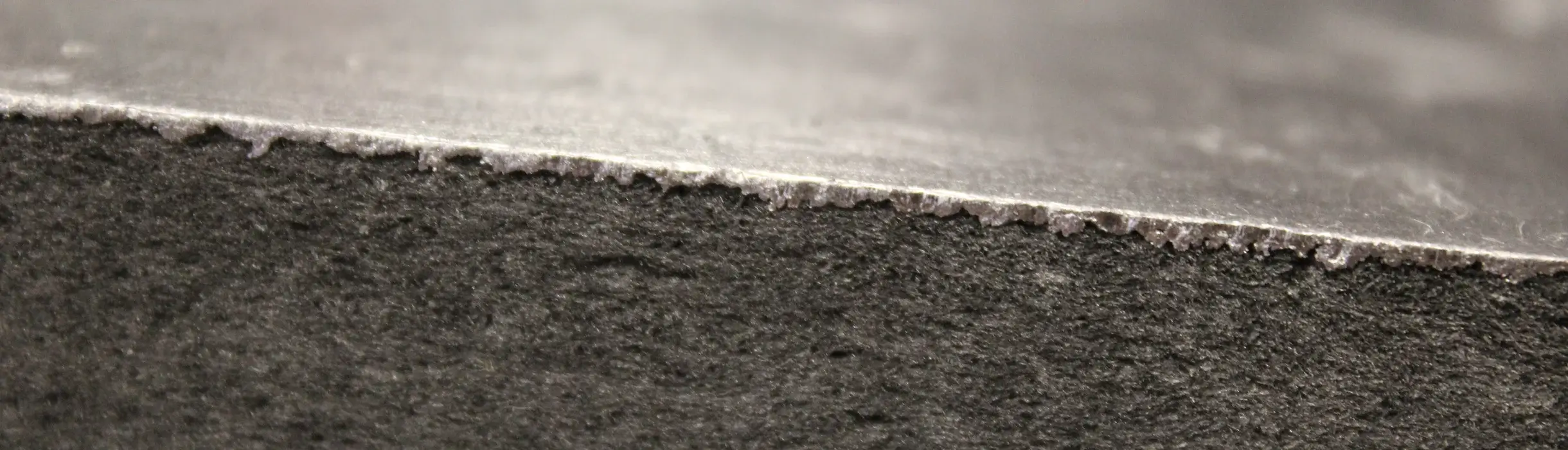
Oxygen works its way into the pores of the graphite and tends to attack the carbon binder between the grains first. As that binder deteriorates, grains can loosen and fall out. The part loses mass, gets more porous, and that additional porosity allows even more oxygen in.
What you see in operation depends on the part:
- Shafts and rotors lose strength and cross-section, and can crack or break in service.
- Heating elements shift in electrical resistance and can develop hot spots.
- Crucibles thin out at the walls, loss of smooth surface, and leakage.
- Machined components lose the tolerances and surface finish you paid for.
The usual ways to fight oxidation, and where they fall short
- Keep oxygen away. Running in a vacuum or an inert gas purge is the most effective protection there is. The catch is that a lot of processes simply can’t be sealed off. Molten aluminum degassing, fluxing, open crucibles, and any part that moves in and out of the hot zone all see air.
- Choose a better grade. A denser, purer grade slows oxidation down. It doesn’t stop it.
- Coat or cover the surface. A surface coating or covering makes a good barrier, right up until it cracks, chips, or gets worn through. Once oxygen can get underneath, the graphite below is unprotected and open to oxidation.
- Treat the whole part body. This is the gap LoOx™ was developed to fill.
What LoOx™ is and how it works
LoOx™ is Ei6’s proprietary oxidation-resistant treatment for graphite. Instead of only coating the outside surface, we impregnate the full body of the part with a specially formulated fluid and then cure it.
That gives you protection in two ways:
- Inside the part. The treatment reaches into the pore structure throughout the body, which is where oxidation does its quiet damage. If the outer surface wears, the LoOxtm treated underneath is protected.
- On the surface. On parts where the design allows it, the cured surface layer stays in place as an extra physical barrier against oxygen exposure.
We can apply LoOx™ to feedstock before machining or to the finished machined part. Either way, it’s scheduled into the production routing, with critical features masked as needed, so the finished part still meets your spec. LoOx™ is available from our facilities in the U.S. and Brazil.
Where LoOx™ earns its keep
Some of the applications where we’ve seen LoOx™ make the biggest difference in part life and cost:
Molten metal pump shafts and rotor heads, including aluminum degassing
- Fluxing tubes
- Heating elements
- Crucibles
- EDM electrodes
- Mechanical carbon parts like bushings, seal rings, and vanes
- Graphite insulation components
- Fixtures and shields exposed to air
How LoOx™ became a standard treatment
LoOx™ didn’t start as a product idea. It started with watching what happened to parts in our customers’ operations. Over several years, Ei6 measured oxidation and part life in these applications, and treated parts consistently showed lower oxidation and longer service life. Once the results held up, we made LoOx™ a standard treatment we offer every customer.
Our experience with Ei6 LoOxtm treated parts including molten metal pump shafts, flux tubes and precious metal crucibles, have consistently shown 50-100% increased life cycles. Pump shafts showed the most positive improvement, nearly doubling their life. All of these extended life parts resulted in more continuous process flow and reduced operational cost. These advantages should not be overlooked.
Is LoOx™ right for your part?
To be honest, LoOx™ isn’t magic, and it doesn’t replace good practice. Proper part fit, sealing, and installation still matter. Your operational results depend on use temperature, atmosphere, duty cycle, and part design.
When Ei6 talks with a customer about whether LoOxtm makes sense, these are the initial questions:
- What temperature does the part run at, and how long is the cycle time?
- Is it exposed to air all the time or only part of the cycle?
- How does the part fail today? Surface wear, breakage, or loss of performance?
- What does a failure really cost you once you add downtime and labor to the part price?
If oxidation is shortening part life in your operation, contact Ei6 and let’s talk through whether LoOx™ is a good fit for your application.