Grafito isostático vs. grafito extruido: por qué importa la diferencia
Elegir entre grafito isostático y grafito extruido comienza con entender cómo se fabrica cada material y cómo eso afecta su desempeño.
Ambos son materiales de grafito sintético, pero sus procesos de formado crean diferentes estructuras de grano y características del material. Estas diferencias pueden influir en la resistencia, uniformidad, maquinabilidad, estabilidad dimensional y desempeño en aplicaciones exigentes.
No existe un grado de grafito “mejor” de forma universal. La elección correcta depende de lo que su proceso requiere del material.
¿Qué es el grafito isostático?
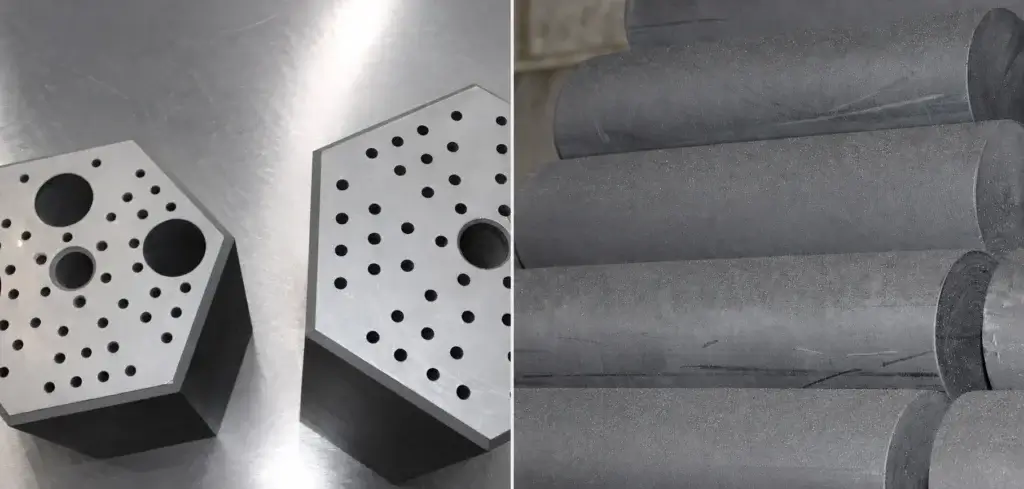
El grafito isostático se forma isostáticamente mediante la aplicación de presión uniforme en todas las direcciones. Este método de fabricación produce un material de grano fino con una estructura altamente uniforme y propiedades que se mantienen relativamente consistentes independientemente de la orientación.
Esta uniformidad hace que el grafito isostático sea adecuado para aplicaciones que requieren precisión, estabilidad dimensional, maquinado complejo y desempeño consistente del material. Su estructura de grano fino también permite detalles precisos y tolerancias estrechas.
Como resultado, el grafito isostático suele considerarse para aplicaciones exigentes donde la precisión y la consistencia del material son prioridades. Sin embargo, estas características no lo convierten automáticamente en la opción correcta para cada componente. El tamaño, el entorno operativo, los requisitos de desempeño y el costo deben influir en la selección del material.¿Qué es el grafito extruido?
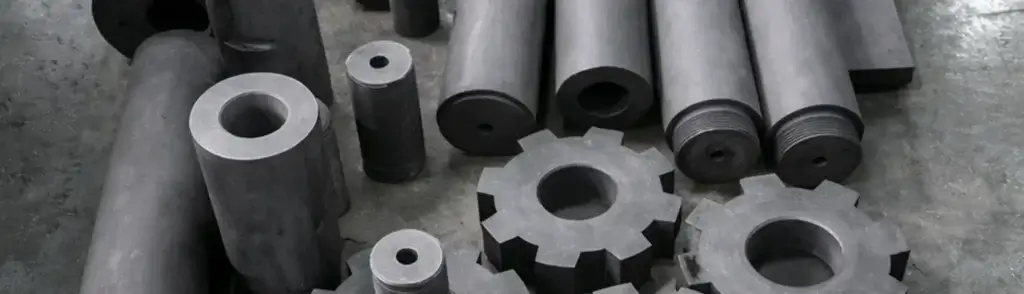
El grafito extruido se produce al forzar una mezcla de grafito a través de un dado. Este proceso crea una estructura de grano direccional, lo que significa que ciertas propiedades del material pueden variar según la orientación.
La extrusión es particularmente efectiva para producir secciones de grafito más grandes o largas con perfiles transversales consistentes. Esto hace que el grafito extruido sea una opción práctica para componentes industriales donde el tamaño, la geometría y la eficiencia de costos pueden tener prioridad sobre la uniformidad de grano fino.
Su estructura direccional debe considerarse durante el diseño y maquinado del componente. Entender cómo se cargará y utilizará el componente terminado es esencial para determinar si un grado extruido puede ofrecer el desempeño requerido.Cómo elegir el grado de grafito adecuado para su proceso
La selección del material debe comenzar con la aplicación, no con el método de fabricación.
Considere las dimensiones del componente, la geometría, las tolerancias, la temperatura de operación, las cargas mecánicas y la uniformidad requerida del material. Un componente de precisión con detalles complejos puede beneficiarse del grafito isostático de grano fino, mientras que un componente industrial más grande puede ser más adecuado para un grado extruido.
El precio de compra es solo una consideración. La maquinabilidad, la vida útil, la consistencia y los requisitos operativos contribuyen al valor total de un componente de grafito.
El objetivo es sencillo: hacer coincidir las propiedades del material con las exigencias del proceso.Encuentre la solución de grafito adecuada con Ei6
Elegir el grado de grafito adecuado requiere más que comparar especificaciones en una ficha técnica.
Con más de 50 años de experiencia en grafito, Ei6 trabaja con los clientes para evaluar los requisitos de la aplicación e identificar materiales adecuados para su proceso. Nuestro conocimiento del grafito y nuestras capacidades de maquinado de precisión respaldan aplicaciones donde la selección del material, la precisión dimensional y el desempeño confiable importan.
Ya sea que esté evaluando grafito isostático, grafito extruido u otro grado especial, Ei6 puede ayudarle a identificar el material más adecuado para su aplicación.